






![The Fishermen Softball team had their work cut out for them against #2 Norton in the Elite 8 and failed to jump back from an early 7-0 deficit. [Photo courtesy of Dawn Enos]](https://thegillnetter.com/wp-content/uploads/2026/06/709166380_10164685011414728_8841526148411460004_n-1200x801.jpg)
![Abby Noble allowed just two hits across seven innings of work, sending Gloucester to their third straight Sweet 16. [Photo courtesy of Dawn Enos]](https://thegillnetter.com/wp-content/uploads/2026/06/689006146_10164619441929728_5207318100033678928_n-2-1200x801.jpg)
![Boys 4x400m poses with medals from left to right Vincent Mannone, Jefferson do Carmo, Seamus Linehan, Deion Kasera.
[Photo Courtesy of David Coleman]](https://thegillnetter.com/wp-content/uploads/2026/06/IMG_2470-1200x900.jpeg)
![The GHS Softball and Baseball teams are set to enter the playoffs this week, both hosting the Round of 32 on the island.
[Photo Courtesy of Dawn Enos and the MIAA]](https://thegillnetter.com/wp-content/uploads/2026/06/Power-Rankings-1080x1080-1.png)
![The Gloucester DECA chapter poses together after the Grand Award Ceremony. [Photo courtesy of Gloucester DECA]](https://thegillnetter.com/wp-content/uploads/2026/03/IMG_7994-1200x736.jpeg)





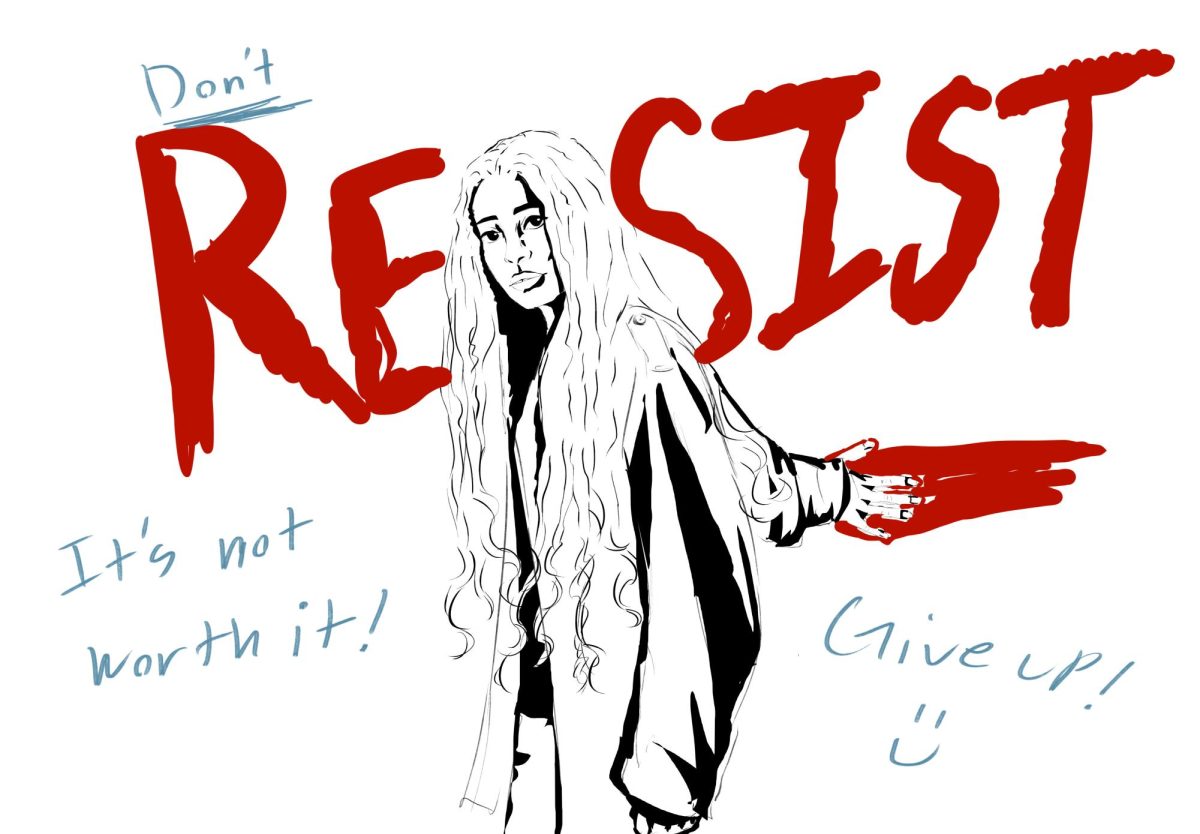





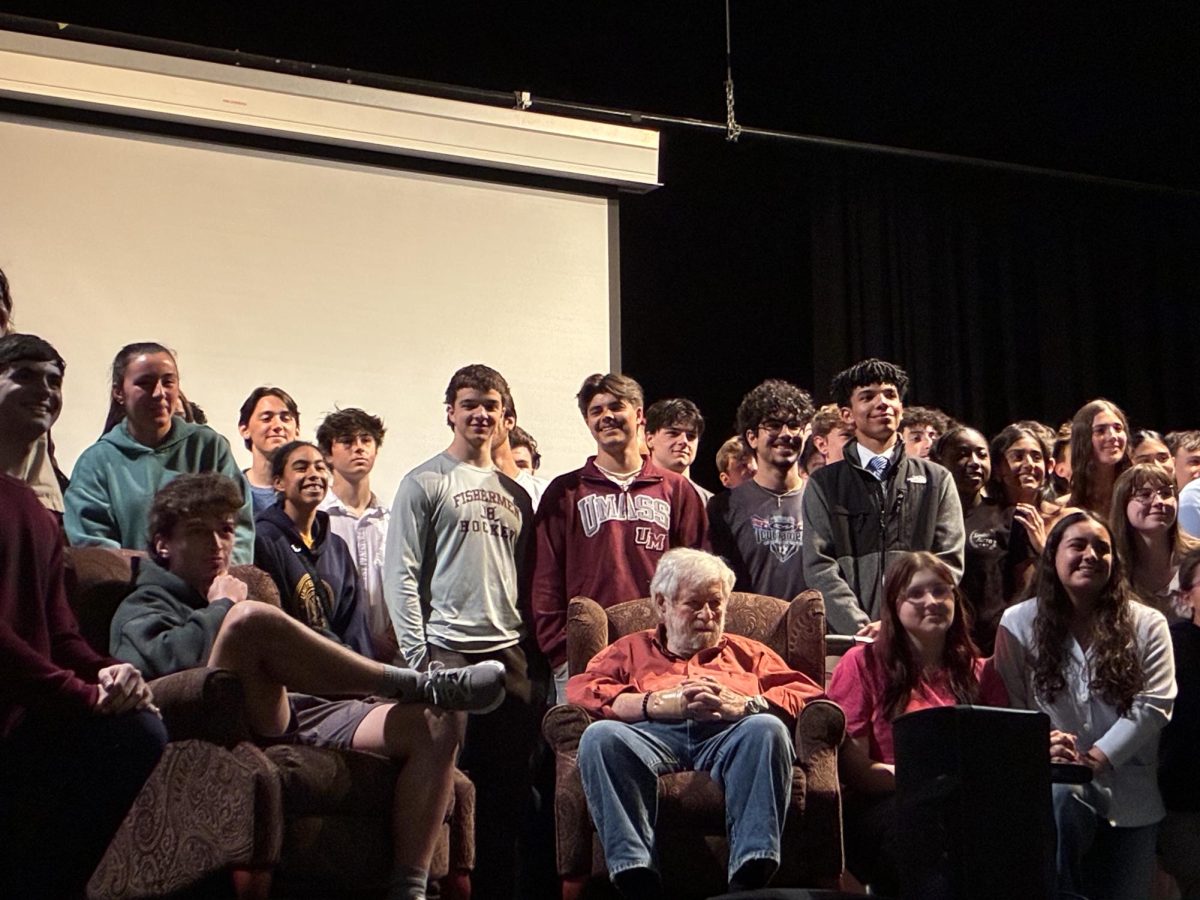
GHS students had the rare opportunity to hear the testimony of 94-year-old Holocaust survivor Werner Salinger this week. Salinger, accompanied by Lappin Foundation president and director Debbie Colton, shared his memories of the holocaust, the aftermath, and its effect on his life up until now.
Ms. D’Antonio introduced Salinger and Colton to the students, saying it was a “distinct honor and privilege” to “hear history from somebody who has lived it.”
Before Salinger started his speech, Colton explained the importance of Salinger’s presence at the school and just how much the students should cherish this opportunity.
“10-15 years from now, there will likely be no holocaust survivors left,” said Colton. “Every story of a holocaust survivor is unique and remarkable.” Colton emphasized how important it is that, now that there will be fewer holocaust survivors to recount the holocaust themselves, it is critical that the new generation hear these stories and remember them, so they will not repeat themselves.
Colton handed the mic to Salinger and assisted him as he began to recount his early life in Germany under the Nazi regime. While Colton stated she believed the holocaust started in 1933 with Hitler’s rise to power, Salinger said that “1935 was the beginning of the holocaust, to me.”
1935 was the year that the Nuremberg Laws were passed. These laws, which were put in place by Nazi officials who’d come to the U.S to study our own racial laws like the Jim Crow laws and Asian exclusion laws, stripped the Jewish people of their citizenship, and with it, their humanity, Salinger claimed.
Salinger described how he felt as a young boy after the laws were passed.
“I went to school with other German kids. Overnight, I could only go to school with Jewish kids. Overnight, the German kids became my enemies.”
Salinger said that German children he’d previously befriended treated him “like a monster”.
The Nuremberg laws made it so that Salinger’s father, who was a lawyer, could no longer work cases for and take on non-Jewish clients. His mother, an orthodontist, could no longer treat non-Jewish patients.
Salinger described how his parents knew they had to act quickly and acquire the three things they needed to flee Germany as soon as possible. A visa, some money, and the support of a U.S citizen. Salinger remembered his family being well off due to both of his parents’ successful careers; money wasn’t an issue. Citizen support and a visa were where things got tricky.
“I have no idea how my parents got a visa,” Salinger said. “It was incredibly hard to do!”
With the help of a distant relative in America, all the money they had, and a visa, Salinger’s family could make the trip across the sea to America. To safety.
Just before the family was to evacuate their home, they experienced the night of broken glass. Salinger recalls looking through his apartment window and seeing the destruction left in its wake.
“I saw shattered glass in the street,” he said. “I saw bodies in the street, I smelled the thick smoke from the burning synagogue.” Salinger paused for a moment. “It’s hard for me to talk about this part. Every time.”
Shortly after witnessing the devastation, Salinger and his family were able to flee Germany once and for all. But leaving didn’t solve all of his family’s woes. Salinger’s mother passed from tuberculosis she had picked up on the ship to America only 10 months after they arrived. Salinger said he “never truly knew” his mother because of how young he was when she passed.
Since Tuberculosis was so contagious, Salinger was moved to his father’s cousin’s house, and spent most of his childhood there. Salinger’s relative just so happened to live down the street from another Jewish refugee named Albert Einstein.
Salinger described how, as a kid, he would occasionally visit Einstein’s household.
“We’d walk through the garden,” he said. “He’d play his violin for me. He loved kids, and I was one to him.”
Despite the chaos and despair Salinger experienced in his early years, the rest of his youth was steady, for the most part. As he grew older, Salinger wanted to put himself to “good use” and joined the air force. While in the air force, Salinger was assigned to work in Germany, where he eventually met his wife, who was the daughter of a Nazi soldier.
Salinger described that his father-in-law wasn’t a “Nazi” in the political sense, at least to him.
“He was drafted into the war. He was very progressive and liberal in his views.” Salinger said.
When a student asked Salinger how he was able to overcome his father-in-law being a Nazi soldier, Salinger said it wasn’t something that needed to be overcome: “I loved him; he was a good man, and he loved me too.”
After returning to America with his wife and settling down, Salinger spent most of his life in Massachusetts, living in Rockport for a time, where his wife ran a store for 14 years. He has 4 children, 6 grandchildren, and 7 great-grandkids.
After his speech and questions concluded, the students went up on stage to take a picture with Salinger.
Salinger’s emotional speech left a strong impression on many students.
“It was very impactful,” freshman Ava Rogers said. “I feel like it was really special to be in the same room as a Holocaust survivor because they’ve been through so much. It’s important to hear the stories from a primary source.”
Another student, Grace Castellucci, noted how impressive it was that we get the chance to hear Salinger’s life story.
“I think it’s really cool that he’s willing to travel to come talk to us, even though we’re such a small school.” Said Castellucci. “Through him, we can learn from the mistakes in history and not make them again.”